
Why exterior paint peels, bubbles and flakes, and how it is fixed properly
Updated 11 minute read
Short answer
Peeling exterior paint means the paint has lost its grip on the surface underneath. Dulux's trade problem solver lists moisture, inadequate preparation and lower quality paint among the causes, and bubbling is the same loss of adhesion in small patches. This guide matches each symptom to its likely cause, explains what a proper repair involves, and shows when older paint must be tested before anyone scrapes or sands it.
About this guide
General information only. Paint on homes built before 1970 may contain lead, and homes built or renovated before 1990 may contain asbestos. Do not dry sand, dry scrape, water blast or power sand suspect surfaces. Have them tested, and talk to a licensed professional before work starts.
General information from Snowy's Painting, a Dulux Accredited Painter working out of Caboolture across North Brisbane. Every job is different, so Dean looks at yours in person before giving a free written estimate.

In this guide
Peeling paint means the paint has lost its grip
Peeling paint means the coating no longer bonds to the surface underneath, so it lifts away in strips, sheets or flakes. Dulux's trade problem solver defines peeling as loss of paint due to poor adhesion. Where a wall carries a primer and top coat, or several coats built up over the years, Dulux notes the peeling can involve some or all of those layers.
That is why a peeling wall is a warning about the next coat, not only the current one. Paint put on over a surface that has lost adhesion can only hold as well as the layer beneath it. Before anything is repainted, the useful questions are what made the paint let go, and how much of the old coating is still sound.
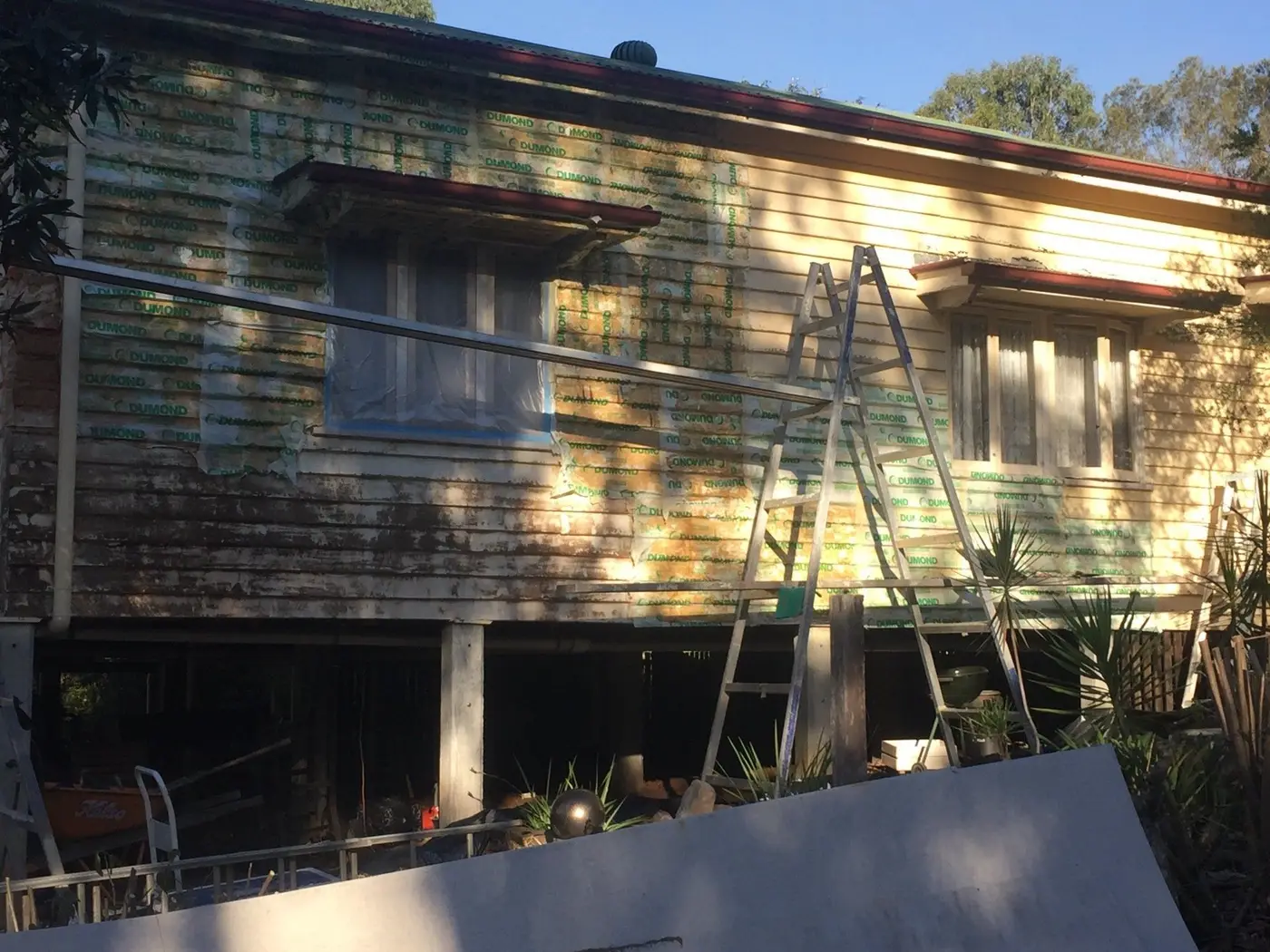
When you look at a failed area, note whether the flakes show bare render, brick or timber on the back, or an older colour of paint. Note too whether the damage sits near joints, gutters, window frames or the roofline. Those details help whoever repairs it find the cause, which the sections below work through one symptom at a time.
Peeling, bubbling, flaking, cracking and chalking: what each one tells you
Each type of paint failure points to a different set of causes, so naming the symptom correctly is the first step to a repair that lasts. The table below sets out five exterior paint failures, with the causes Dulux lists for each one and what its trade advice says the repair involves.
Cracking deserves early attention. Dulux describes it as the splitting of a dry paint film through at least one coat, which eventually leads to complete failure: hairline cracks first, then flaking chips. While the cracks stay in the paint and do not reach the surface underneath, Dulux says it may be possible to correct them by removing the loose paint, sanding to feather the edges, priming any bare spots and repainting. Once cracking goes down to the substrate, Dulux's advice is to remove all of the paint, then prime and repaint.
Chalking is the one failure that can be partly normal. Dulux says some chalking is a normal way for paint to wear, while excessive film erosion produces heavy chalking that must be dealt with before a repaint.
Moisture is the first thing to rule out
Water is the first cause to rule out when exterior paint peels or bubbles, because Dulux lists it as a cause of peeling, blistering and efflorescence. For peeling, Dulux lists moisture seeping through uncaulked joints, worn caulk, or leaks in the roof or walls. For blistering, it lists moisture escaping through exterior walls, which it says is less likely with water-based (latex) paint than with oil-based or alkyd paint. For efflorescence on masonry, it lists excess moisture escaping through the walls from the inside.
Bubbling that appears after rain or a humid night has its own listed cause. Dulux names dew, high humidity or rain reaching water-based paint shortly after it has dried, especially where the surface preparation was inadequate. Painting a warm surface in direct sunlight is another cause on the same list.
That is why Dulux's exterior painting advice is to avoid direct hot sun, rain and very humid weather, and to protect fresh paint from rain or overnight dew while it dries. It also notes drying can take longer in cool, humid or still conditions. On a North Brisbane house, that means watching the forecast and the time of day, not only the season. Dulux also lists earlier blistering as one cause of peeling, so earlier blistering can lead on to peeling.
Chalky, glossy and aged enamel surfaces resist new paint
New paint struggles to stick to chalky paint, high gloss enamel and aged enamel, so these surfaces need preparation or a suitable primer before a repaint. Dulux groups high gloss enamels, chalky paints and aged enamels with other tough-to-paint surfaces that typically resist coatings, and sells a dedicated adhesion primer for that job.
Chalk is the fine powder that forms on weathered paint. Dulux lists low-grade, highly pigmented paint and interior paint used outdoors as causes of chalking. Its check is simple: once the cleaned wall is dry, run a hand over it. If noticeable chalk is still present, Dulux says to apply a quality primer before repainting.
Gloss and aged enamel need the same care: Dulux treats both as surfaces that resist coatings, which is why it sells a dedicated adhesion primer for them. Both cases come back to the same point: the condition of the old paint decides the preparation, and the preparation decides how long the new paint lasts.
Can you paint over peeling paint? Not over the loose parts
You should not paint over peeling paint until the loose paint is removed, because the new coat can only hold as well as the layer it sits on. Dulux's fix for peeling starts by identifying and eliminating the moisture, then removing all loose paint with a scraper or wire brush, sanding rough surfaces and priming bare timber. Painting straight over flakes leaves the original cause in place along with the failing layer.
Painting over old exterior paint is fine when that paint is sound. Dulux's advice on chalked walls is that if little or no chalk remains and the old paint is sound, no priming is necessary and the surface can be repainted with a quality exterior paint. So the honest answer to whether it is ever okay to paint over old paint is yes, once the loose and chalky parts are gone and what remains is firmly bonded.
For how a whole-house repaint is planned around the condition of the existing paint, see residential painting, which also answers common questions on painting over peeling exterior paint and lead in older homes.
Signs of a bad paint job usually trace back to preparation
The clearest signs of a bad paint job are early peeling, blistering, cracking or chalking, and several of these trace back to preparation or painting conditions rather than to the house. Dulux names good preparation and not over-thinning the paint as the most common ways to avoid finish problems.
Dulux's trade problem solver lists these job-related causes. Peeling: inadequate surface preparation and lower quality paint. Cracking and flaking: paint over-thinned or spread too thin, bare timber painted without priming, and painting in hot or windy conditions that dry water-based paint too fast. Blistering: a warm surface painted in direct sunlight, or rain, dew or high humidity reaching the paint soon after it dried. Chalking: interior paint used outdoors, or low-grade paint.
If a recent repaint is already failing, ask what preparation was done, which primer went on bare areas, what product was used and what the weather was doing on the day. Those are the points Dulux's cause lists turn on.
How a failed exterior wall is prepared before repainting
Peeling paint can be fixed, but the repair is mostly preparation: find the cause, remove what has failed, then prime and repaint in suitable weather. Based on Dulux's trade advice for each failure, the order runs like this.
1. Check the age of the house first. Paint from before 1970 may contain lead, and houses built or renovated before 1990 may contain asbestos, so testing comes before any scraping or sanding (see the next section).
2. Find and fix the water. Dulux's first step for peeling and deep blisters is to identify and remove the moisture source, such as uncaulked joints, worn caulk, or leaks in the roof or walls.
3. Remove all loose paint. Dulux describes a scraper or wire brush for loose paint, sanding rough surfaces, and sanding to feather the edges where shallow cracking has been scraped back.
4. Deal with chalk and salts. Chalk is checked by hand once the wall is dry. On brick, block and render, Dulux says efflorescence is removed with a wire brush, power brush or power washer, rinsed, then sealed with a masonry sealer that is left to dry completely.
5. Prime what is bare. Dulux says to prime bare timber and any bare spots, and to use a primer where chalk remains.
6. Repaint with the right product in the right weather. Dulux recommends a top quality water-based exterior paint for adhesion and water resistance, and avoiding hot sun, rain and very humid days.
Older homes: test before you scrape or sand
On an older house, peeling paint can be a health hazard as well as a maintenance job, so the paint and the cladding should be tested before anyone scrapes, sands or washes it. The Queensland Government says paints containing high levels of lead were used in many Australian houses before 1970, and that house paint in poor condition, such as peeling or flaking paint, is likely to present a health risk. It also says lead can become a health problem during home renovations if lead dust is inhaled. The Australian Government's Lead Alert guide adds that homes built after 1970 might still contain paint with more than 1 per cent lead.
Lead Alert says not to dry sand or use abrasive blasting, and lists dry scraping, dry sanding, burning and blasting among the methods that create the most serious dangers. It warns that colour-change test kits can give false negative and false positive results, suggests testing the underside of a flake because older layers are more likely to contain lead.
Asbestos is the second check. Queensland's asbestos guidance says a house built or renovated before 1990 is likely to have materials containing asbestos, including in the roof, ceiling and walls, and that only a NATA accredited laboratory test can confirm it. It says never to use water blasters or abrasive power tools such as sanders on asbestos containing materials. Lead Alert says homes with lead paint should ideally be assessed and remediated by trained professionals, so treat this section as general information and talk to a licensed professional before work starts.
When it is time to get a painter to look at it
A small patch of flaking paint on an otherwise sound wall can be a small repair, but peeling that keeps coming back, bubbling across a whole elevation, or failing paint on a house old enough for lead or asbestos is worth a professional look before more paint goes on.
Snowy's Painting is a Dulux Accredited Painter based in Caboolture, and gives free estimates for house exteriors across North Brisbane. When you request a free estimate, mention the age of the house and where the paint is failing, and include photos if you can. You can check whether your suburb is covered on the areas we paint page, and see the full scope of interior, exterior, roof and timber work on the residential painting page.
If the walls are sound and you are planning a repaint, the guide to exterior paint for Queensland homes covers choosing a product, and how long exterior paint lasts covers what shortens or extends a paint job's life.
Exterior paint failures: what they look like, the causes Dulux lists, and the repair
Swipe sideways to see the whole table.
| Symptom | What it looks like | Causes Dulux lists | What the repair involves |
|---|---|---|---|
| Peeling | Paint lifting away in strips or sheets, sometimes through several coats | Moisture through uncaulked joints, worn caulk or roof and wall leaks; inadequate preparation; lower quality paint; earlier blistering | Fix the moisture, remove all loose paint, sand rough areas, prime bare timber, repaint |
| Bubbling (blistering) | Bubbles where the paint film has lifted off the surface underneath | A warm surface painted in direct sun; dew, high humidity or rain soon after the paint dried; moisture escaping through the wall | Remove the moisture source, scrape and sand blisters that reach the surface, prime and repaint |
| Cracking and flaking | Hairline cracks that later flake off in chips | Paint over-thinned or spread too thin; bare timber not primed; hot or windy painting conditions | Shallow cracks: scrape, feather the edges, prime, repaint. Cracks to the surface: remove all the paint, prime, repaint |
| Chalking | Fine powder that comes off on your hand | Low-grade, highly pigmented paint; interior paint used outdoors | Remove the chalk, check by hand once dry, prime if chalk remains, repaint |
| Efflorescence | Crusty white salt deposits on brick, block or render | Water passing through masonry; old salts not removed before painting | Fix the moisture, brush off the salts, rinse, apply a masonry sealer, repaint |
Common questions
Why is my exterior paint bubbling after rain?
Often because water reached the paint soon after it dried, or is getting in behind it. Dulux lists dew, high humidity or rain on water-based paint shortly after it dries as a cause of blistering, especially over poor preparation, along with moisture escaping through the wall. Where blisters reach the surface underneath, Dulux says the moisture source is removed first, then the blisters are scraped and sanded before priming and repainting.
Can high humidity cause paint to bubble?
Yes. Dulux names high humidity, along with dew and rain, as a cause of blistering when it reaches water-based paint shortly after the paint has dried. Its exterior painting advice is to avoid very humid weather, direct hot sun and rain, and it notes that drying can take longer in cool, humid or still conditions. Protecting fresh paint from rain and overnight dew while it dries is part of the same advice.
How can I remove flaking paint from my outside wall?
Dulux describes removing loose, flaking paint with a scraper or wire brush, sanding rough areas and priming bare timber. Check the age of the house first. For paint from before 1970, the Australian Government's Lead Alert guide says not to dry sand and lists dry scraping among the most dangerous methods. On houses built or renovated before 1990, Queensland's asbestos guidance rules out water blasters and power sanders on asbestos materials.
How do painters stop paint peeling again on a rendered wall?
By fixing the water before the paint. Dulux describes efflorescence as white salt deposits left as water passes through masonry. Its fix is to find and correct the moisture source, remove the salts and loose material, rinse, apply a masonry sealer and let it dry completely, then topcoat. Loose paint comes off first, and Dulux advises painting outside of hot sun, rain and very humid weather.
Is flaking paint on an older house a lead risk?
It can be. The Queensland Government says paints with high lead levels were used in many Australian houses before 1970, and that peeling or flaking paint is likely to present a health risk. The Lead Alert guide adds that newer homes may still have lead paint, that colour-change test kits can give false results, and that laboratory analysis is needed to confirm it. Have suspect paint assessed by a trained professional before work starts.
Do you fix peeling exterior paint in Caboolture and Morayfield?
Yes. Snowy's Painting is based in Caboolture and paints house exteriors across North Brisbane, including Caboolture and Morayfield, with free estimates. Snowy's is a Dulux Accredited Painter. When you ask for an estimate, mention the age of the house and where the paint is peeling or bubbling, and send photos if you can, so the preparation can be planned before the repaint is priced.
Sources
- Dulux Trade: Peeling (professional painter problem solver)duluxtrade.com.au, read
- Dulux Trade: Blistering (professional painter problem solver)duluxtrade.com.au, read
- Queensland Government: Lead paint exposureqld.gov.au, read
- Australian Government: Lead Alert, the six step guide to painting your homeagriculture.gov.au, read
- Queensland Government: Working safely with asbestos for the home renovatorasbestos.qld.gov.au, read
Related guides
- How long exterior paint lasts in QueenslandHow long exterior paint lasts in South East Queensland, the ten-minute check that shows it is due, and the drier months to plan a repaint around Caboolture.10 minute read
- Choosing exterior paint for Queensland homesHow to choose exterior paint for a Queensland house: match the system to the surface, plan for UV and salt air, and know the limits of dark colours.9 minute read
- Painting a brick houseThinking of painting face brick? Which paint suits exterior brick, the moisture and salt checks to do first, the prep, and why it is hard to undo.11 minute read
Where Snowy's can help
Want a painter to look at your job?
Tell us what needs painting and where. Dean will call back to book a time to look and give you a free written estimate.
Call 0410 520 550Unit 5/5 Lear Jet Drive, Caboolture QLD 4510
Working across Caboolture, Caboolture East, Caboolture South, Upper Caboolture, Morayfield and the rest of North Brisbane. Meet the crew or see other ways to reach us.
Or send the job details